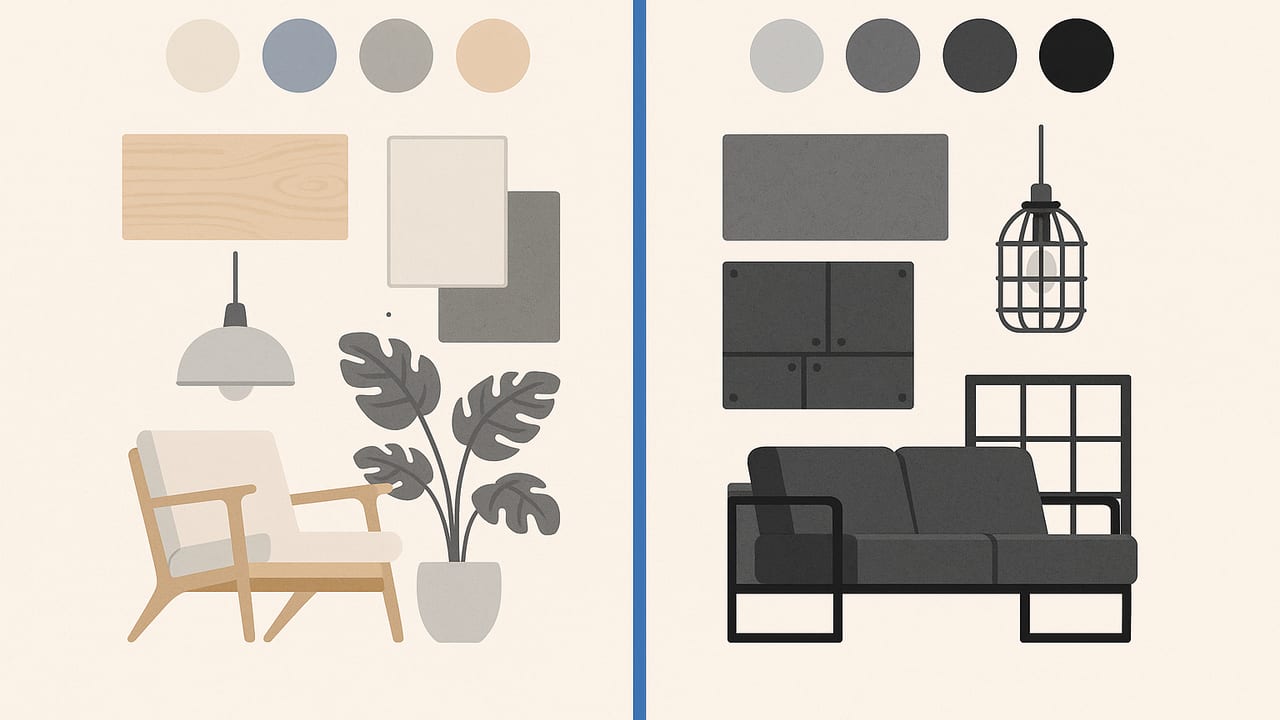
Two of the most enduring interior styles share a love for simplicity yet part ways in mood: Nordic (often called Scandinavian) and Industrial. One bright, warm, and soft; the other rugged, moody, and raw. If you’re choosing between them—or planning to blend both—this guide breaks down the essentials so you can create a space that feels coherent, livable, and photogenic.
At a Glance: Key Differences
| Aspect | Nordic (Scandinavian) | Industrial |
|---|---|---|
| Palette | Light, neutral, airy (whites, soft grays, warm beiges) | Dark, high-contrast (charcoal, black, brick, concrete) |
| Materials | Natural wood (oak, birch), wool, linen, ceramics | Steel, iron, concrete, leather, exposed brick |
| Texture | Soft textiles, matte finishes, smooth wood grain | Rugged, patinated, raw and utilitarian |
| Furniture Silhouette | Clean lines, light legs, ergonomic, low visual weight | Bold profiles, heavier frames, functional hardware |
| Lighting | Diffuse, warm, layered (lamps, candles) | Directional, task-heavy, metal shades, visible bulbs |
| Atmosphere | Calm, cozy, bright | Dramatic, edgy, loft-like |
| Best Fit | Small spaces, low natural light, family-friendly | Lofts, open plans, high ceilings, creative studios |
| Acoustics | Soft furnishings absorb sound | Hard surfaces may echo (needs sound control) |
Color, Materials, and Texture
Nordic: Nature, light, and warmth
Nordic interiors lean on a restrained palette and nature-forward materials. Think creamy whites, light oaks, soft grays, and tactile textiles. The effect is restful and daylight-enhancing—ideal where winters are long or rooms are small. Choose matte or eggshell finishes to minimize glare and showcase subtle texture.
- Go-to surfaces: white-painted walls, soaped oak floors, ceramic table lamps, wool throws.
- Accents: warm metals like brass, muted greens from plants, and handmade ceramics.
- Pattern strategy: minimal; introduce small-scale patterns in textiles for visual interest without clutter.
Industrial: Raw, architectural character
Industrial interiors celebrate the building—exposed brick, concrete, ductwork, and steel. The palette favors darker hues and strong contrast, which can sharpen edges and dramatize volume. It works beautifully in open-plan lofts or spaces with generous windows.
- Go-to surfaces: sealed concrete floors, blackened or galvanized steel, cognac leather, wire glass.
- Accents: vintage factory stools, pulley lights, riveted details, patinated finishes.
- Pattern strategy: minimal; rely on material variation (brick, grain, patina) as the “pattern.”
| Style | Color | Hex | Use |
|---|---|---|---|
| Nordic | Warm white | #F5F5F0 | Main walls, ceilings |
| Nordic | Soft gray | #D8DAD6 | Cabinetry, textiles |
| Industrial | Charcoal | #2F2F2F | Metal frames, accent walls |
| Industrial | Cognac leather | #8B5E3C | Sofas, chairs |
Design axiom: less, but better. Let the few materials you choose be honest, consistent, and well-finished.
Furniture and Layout
Both styles value function, but they stage it differently. Nordic furniture typically sits on slender legs to lighten visual weight and expose floor area, enhancing perceived space. Industrial pieces embrace sturdier frames, visible hardware, and practical fittings (casters, brackets) that nod to workshop origins.
- Clearances: aim for 30–36 in (75–90 cm) walking paths, 16–18 in (40–46 cm) from sofa to coffee table, and 36 in (90 cm) behind dining chairs for comfortable pull-back.
- Storage: Nordic favors closed storage to keep visuals calm; Industrial tolerates open shelving, pegboards, and visible storage as character.
- Scale: In small rooms, Nordic silhouettes prevent crowding. In large rooms, Industrial anchors space with weighty pieces and tall shelving.
Lighting and Atmosphere
Lighting can make or break both styles. Nordic lighting layers ambient, task, and accent with warm color temperatures and diffuse shades. Industrial lighting leans task-first with metal shades, prismatic glass, and exposed bulbs for a crisp edge.
- Bulb color temperature: Nordic 2700–3000K for warmth; Industrial 3000–3500K for a neutral, slightly cooler vibe. Keep CRI 90+ for accurate color rendering.
- Layering: combine ceiling lights with floor and table lamps; add under-cabinet strips in kitchens and wash lights on brick or wood to highlight texture.
- Glare control: choose frosted glass or fabric shades for Nordic softness; for Industrial, use barn shades or shades with baffles to control hotspots.
Budget, Durability, and Maintenance
Both styles can be done affordably or at a splurge level depending on where you invest.
- Nordic budget strategy: invest in one great sofa and a real-wood dining table; save on side tables and accessories. Light woods can scuff—use felt pads and breathable finishes for easy refinishing.
- Industrial budget strategy: reclaimed materials can be cost-effective, but custom metalwork adds up. Black surfaces show dust; stainless shows fingerprints—keep microfiber cloths and matte finishes handy.
- Longevity: leather, wool, and solid wood age gracefully. Engineered veneer and thin powder coats may chip; prioritize thickness and repairability.
Room-by-Room Ideas
Living Room
- Nordic: pale oak floors, low-profile sofa on legs, linen curtains, layered rugs, and a paper lantern pendant for a soft glow.
- Industrial: cognac leather sofa, steel-framed coffee table, track lighting, a large factory-style floor lamp, and a vintage map or blueprint as art.
Kitchen
- Nordic: white or light-gray cabinets, wood pulls, matte quartz, open wood shelves for ceramics, under-cabinet warm LED strips.
- Industrial: flat-panel dark cabinets, stainless counters or concrete-look quartz, steel shelving, pendant factory lights over the island.
Bedroom
- Nordic: platform bed with wood headboard, wool throw, sconces with fabric shades, soft blackout curtains.
- Industrial: metal bed frame, linen duvet, articulating wall sconces, raw-edge bench, blackout roller shades with side channels.
Home Office
- Nordic: birch desk, ergonomic chair, cable management trays, plant for biophilia, acoustic pinboard.
- Industrial: trestle or pipe desk, steel shelving, task lamp with jointed arms, cork or felt wall panels to tame echo.
Bathroom
- Nordic: light tile, oak vanity, matte hardware in brushed brass or black, frosted glass sconces.
- Industrial: concrete-look tile, black-framed shower screen, exposed pipe-style fixtures, prismatic bulkhead sconces.
How to Mix Nordic and Industrial Without Clashing
Blended spaces can feel the most personal. The trick is to set a dominant language, then add controlled contrast.
- Pick a ratio (60–30–10): choose one style as the 60% base, the other as 30%, and reserve 10% for accent color or statement pieces.
- Unify with color: keep wall and large-surface colors consistent across the room so contrasting materials feel intentional.
- Pair materials consciously: light oak with blackened steel; cognac leather with warm white walls; concrete with soft wool.
- Repeat elements: if you introduce a black metal frame, repeat it in lighting or shelving to avoid one-off “noise.”
- Balance textures: every hard surface gets a soft counterbalance—rugs, curtains, cushions, or acoustic panels.
Small Spaces vs Lofts
In compact apartments, Nordic principles excel: lighter palettes reflect light, leggy furniture reveals floor area, and closed storage keeps the eye calm. For small-space Industrial, keep the palette restrained (charcoal accents rather than black walls), emphasize vertical storage with slim steel frames, and use glass partitions with black mullions instead of solid walls to maintain openness.
In large lofts, Industrial thrives—tall shelving, oversized pendants, and sectional sofas ground the volume. To avoid a cold feel, borrow Nordic warmth through layered textiles, plants, and warmer light temperatures.
Quick Decision Guide
- Prefer bright, cozy, and low-maintenance? Choose Nordic.
- Love dramatic contrast, architectural grit, and open-plan energy? Choose Industrial.
- Have a small, dim room? Nordic paints it larger.
- Have high ceilings and brick or concrete? Industrial highlights them.
- Want both? Use a Nordic base with Industrial accents for a balanced, timeless mix.
Common Mistakes to Avoid
- Over-theming: avoid turning your home into a stage set. Use authentic materials sparingly and functionally.
- Too much black: without counterbalance, Industrial can feel heavy. Add warm wood and textiles.
- All-white without texture: Nordic needs tactile layers to avoid looking sterile.
- Ignoring acoustics: hard, reflective surfaces in Industrial need rugs, curtains, or panels.
- Cheap faux finishes: low-quality faux brick or paper-thin veneers date quickly. If you go faux, choose high-grade, matte, and well-installed.
Sample Spec Snippet (Mixed Nordic + Industrial Living Room)
Walls: Warm white, eggshell (#F5F5F0), baseboards semi-matte
Floor: Light oak, matte urethane, 7.5 in planks
Sofa: 84 in cognac leather, leggy profile (seat height 17–18 in)
Coffee table: 48 x 24 in, blackened steel frame, oak top
Rug: 8 x 10 ft wool, low pile, light gray (#D8DAD6)
Lighting: 3000K CRI 90+; paper lantern pendant + black metal floor lamp
Shelving: 72 in tall steel unit, open, with wood shelves
Art: 1 large piece (30 x 40 in), simple black frame; keep gallery wall minimal
Greenery: 2 medium plants for softness and air quality
Clearances: 30–36 in circulation, 16–18 in sofa-to-table, 36 in behind seating
Maintenance and Sustainability Tips
- Finishes: favor matte and satin finishes—they hide fingerprints and keep glare down.
- Repairability: choose solid wood and modular metalwork that can be refinished or re-coated.
- Textiles: wool and linen breathe and last; use removable cushion covers for laundering.
- Reclaimed pieces: Industrial style is a natural fit for reclaimed timber and upcycled metal; Nordic pairs well with certified woods and eco-friendly oils.
Putting It All Together
“Nordic vs Industrial decor” isn’t a binary choice—it’s a spectrum. Start by deciding the mood you want at different times of day. If mornings feel sluggish, prioritize Nordic brightness and warmth in your main living areas. If evenings are your prime time, let Industrial’s contrast and metal accents add definition and atmosphere. The most successful rooms pick a dominant language, curate a few standout materials, and repeat them with intention.
Visualize Before You Commit
Testing palettes, materials, and furniture scale in your actual layout helps you avoid costly mistakes. If you have a black-and-white floor plan, an app like Floor Plan to 3D can transform it into a detailed 3D render so you can compare Nordic and Industrial schemes, adjust lighting temperatures, and export high-resolution images for feedback before you buy.
Bottom line: Choose the style that supports how you live, let materials lead, and design the light as carefully as the furniture. With a clear plan and a few well-chosen pieces, either approach—on its own or blended—can feel timeless, comfortable, and unmistakably yours.