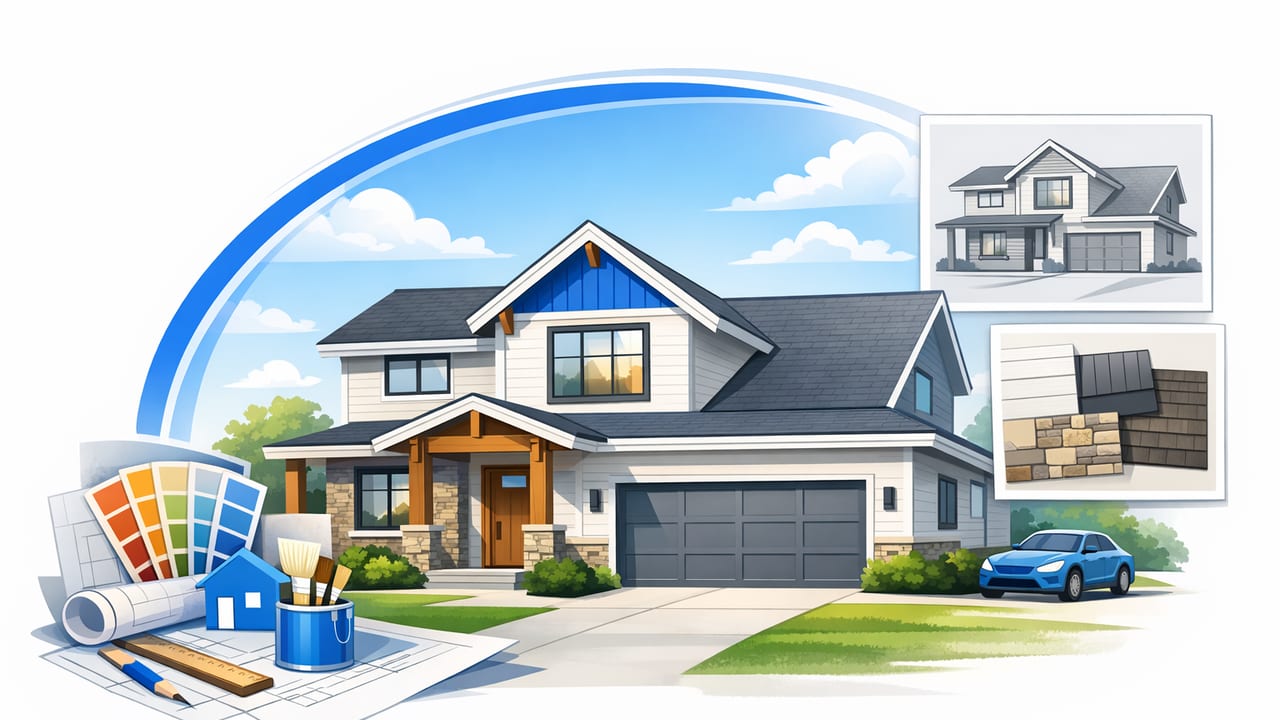
Home exterior design is equal parts architecture, function, and first impression. Done well, an exterior refresh can modernize a dated facade, improve durability and energy performance, and increase curb appeal without forcing a full rebuild. Done poorly, it can create mismatched materials, awkward proportions, and expensive do-overs.
This guide walks through a clear, repeatable process for exterior redesign—covering style, proportions, materials, color strategy, lighting, landscaping, and how to validate ideas with realistic previews before you commit.
1) Start with constraints: what you can’t change (and shouldn’t fight)
The fastest way to make exterior updates look “off” is to ignore the underlying geometry. Before picking colors or cladding, document the fixed elements that will shape every decision:
- Roof form and pitch (gable, hip, flat, shed) and the visible roofline from the street
- Window rhythm (alignment, spacing, size variations) and whether replacements are possible
- Entry location (centered vs. side) and the path people naturally take
- Garage dominance (especially on suburban front elevations)
- Local rules: HOA palette restrictions, heritage overlays, setback limitations
- Climate reality: sun exposure, wind-driven rain, freeze/thaw cycles, coastal corrosion
Design tip: If your roof is visually heavy (dark shingles, low pitch, large overhangs), you’ll usually need a lighter wall color or stronger vertical elements to rebalance the facade.
2) Pick a style direction (but keep it flexible)
Style is useful because it narrows decisions: trim thickness, window color, materials, and landscaping. But it shouldn’t become a costume. Choose a direction that respects your home’s era and proportions, then allow modern upgrades where they make sense.
Common exterior style directions that work for many homes
- Modern/Contemporary: simplified lines, fewer materials, black or bronze windows, warm wood accents
- Modern Farmhouse: high-contrast palette, board-and-batten or lap siding, metal awnings, simple landscaping
- Updated Traditional: classic proportions with refreshed colors, upgraded lighting, refined trim details
- Transitional: traditional massing with cleaner detailing and a tighter color/material palette
Rule of coherence: The exterior reads best when roof + walls + trim + accent feel like one family, not four unrelated decisions.
3) Solve proportion problems before choosing finishes
Most curb-appeal issues aren’t really “color problems.” They’re proportion and focal-point problems. Address these early so your materials and color choices land well.
High-impact exterior fixes that don’t require structural work
- Strengthen the entry: enlarge porch lighting, add a small canopy/portico, widen steps, or frame the door with trim
- Create vertical emphasis: add battens, taller shrubs, or a vertical cladding panel to counter a wide, low facade
- Reduce garage dominance: paint the garage door closer to the body color, add side lights, or upgrade door style
- Clarify “base and top”: use a darker base material (stone skirt, darker siding on the lower portion) to ground the home
Quick check: Stand across the street and squint. Your eye should naturally land on the front door (or a deliberate focal feature), not the garage or random trim contrasts.
4) Choose materials by performance first, aesthetics second
In home exterior design, material choices affect maintenance, moisture behavior, and longevity. Select materials that fit your climate and your willingness to maintain them.
Exterior cladding comparison (practical overview)
| Material | Best For | Pros | Watch Outs |
|---|---|---|---|
| Fiber cement siding | Most climates | Durable, paintable, fire resistant, stable | Heavier install, needs correct detailing to avoid moisture issues |
| Engineered wood | Balanced cost + appearance | Warm look, easier install than masonry, good profiles | Needs proper sealing and ongoing paint/stain maintenance |
| Vinyl siding | Budget updates | Lower cost, low maintenance, many colors | Can look less premium; heat warping risk; fewer crisp details |
| Brick/stone veneer | Accents, base courses, columns | High-end feel, strong texture, long life | Added weight/cost; ensure proper drainage plane |
| Stucco | Dry climates, certain styles | Clean monolithic look, good sculpting | Cracking and water intrusion risks if detailing is poor |
Material-mix tip: If you use multiple claddings, keep them to 2–3 materials max and assign them clear roles (e.g., primary wall, accent volume, base/columns).
5) Build a color palette that reads well in real light
Exterior color is tricky because it’s influenced by daylight shifts, shadows, nearby landscaping, and roof color. A palette that looks perfect on a tiny swatch can look too bright or too muddy on a full elevation.
A reliable 60–30–10 approach
- 60% Body color: main siding/stucco
- 30% Secondary: trim, gables, or a second cladding
- 10% Accent: front door, shutters (if architecturally appropriate), small metal details
How to avoid the most common color mistakes
- Don’t fight the roof. Choose undertones that harmonize with shingles/tiles (warm, cool, neutral).
- Use contrast intentionally. High contrast highlights lines; low contrast simplifies and modernizes.
- Test at real scale. View large samples outdoors morning/noon/evening before committing.
Shortcut: If you want a modern refresh without major construction, try a mid-tone body (greige, warm gray, muted taupe) with crisp, slightly darker trim and one warm accent (wood door or copper lighting).
6) Upgrade exterior lighting like a designer (not just a homeowner)
Lighting is one of the highest ROI improvements in home exterior design. It adds safety, enhances architecture at night, and makes materials look richer.
Layered exterior lighting checklist
- Entry lights: appropriately sized sconces or pendants; warm color temperature for welcoming feel
- Path lighting: subtle, evenly spaced, avoids “runway” glare
- Accent lighting: uplight a feature tree or textured wall; downlight from eaves for clean wash
- Garage lighting: improves function; match fixture family to entry
Sizing tip: Undersized sconces are a common problem. When in doubt, go slightly larger—especially for tall entry walls.
7) Landscaping is part of the facade (treat it as architecture)
Landscaping isn’t decoration; it frames the house. A strong exterior design plan links planting shapes and hardscape lines to the home’s geometry.
Simple landscaping moves that elevate curb appeal
- Define the walkway. A clear path (and an intentional approach angle) makes the entry feel premium.
- Use “foundation planting” sparingly. Avoid a continuous hedge that hides the house base.
- Repeat forms. Match plant shapes to architecture (upright plants for vertical facades, rounded shrubs for softer styles).
- Add one focal tree. A single well-placed tree often does more than many small shrubs.
Budget strategy: Spend first on hardscape structure (edging, walkway, porch steps), then add plants in phases.
8) Preview the redesign before you spend: a practical visualization workflow
Exterior projects can involve many interacting decisions—materials affect color, color affects trim visibility, landscaping affects scale, and lighting changes the night look. The safest path is to preview options before ordering materials.
A repeatable workflow for exterior concept testing
- Collect inputs: front elevation photo(s), roof color, existing materials, and a basic floor plan for proportions
- Set goals: “Modernize without changing windows,” “reduce garage dominance,” “add warmth,” etc.
- Create 2–3 concept directions: keep differences clear (palette + material strategy + entry emphasis)
- Validate in daylight and night: ensure the design reads in shadow and under exterior lighting
- Choose a ‘minimum viable scope’: the smallest set of changes that achieves 80% of the look
Example: a simple exterior design brief you can reuse
If you’re using an AI tool or collaborating with a designer/contractor, a consistent brief reduces back-and-forth. Here’s a copy-ready template:
{
  "style_direction": "transitional modern",
  "must_keep": ["roof color", "window sizes", "brick on lower half"],
  "priorities": [
    "make entry the focal point",
    "reduce visual weight of garage",
    "add warmer materials"
  ],
  "color_preferences": {
    "body": "warm light neutral",
    "trim": "slightly darker neutral",
    "accent": "natural wood or muted color"
  },
  "materials": ["fiber cement", "wood accent", "black metal lighting"],
  "landscaping": "clean lines, minimal, drought-tolerant",
  "budget_level": "mid"
}
This kind of structured brief helps keep exterior iterations coherent, especially when comparing multiple render options.
9) A final quality checklist for home exterior design
- Focal point: Is the entry clearly emphasized from the street?
- Material hierarchy: Do materials have clear roles (primary/secondary/accent)?
- Color harmony: Do body/trim/roof undertones match?
- Scale: Are lights, house numbers, and columns sized to the facade?
- Detailing: Are transitions (corners, window trim, base courses) resolved cleanly?
- Night view: Does lighting flatter the architecture and improve safety?
- Maintenance: Are you choosing finishes you can realistically maintain?
10) Bringing it all together
The best exterior refreshes don’t rely on a single dramatic choice. They come from a coordinated plan: solve proportions, pick durable materials, build a restrained palette, and use lighting and landscaping to support the architecture. When you can preview options in realistic visuals, decisions become clearer—and expensive surprises are easier to avoid.
Gentle next step: If you want to translate measurements and layout intent into quick visuals for planning, an app like Floor Plan to 3D & Home Redesign can help you move from a basic plan to clean 3D renders and concept variations for review.